

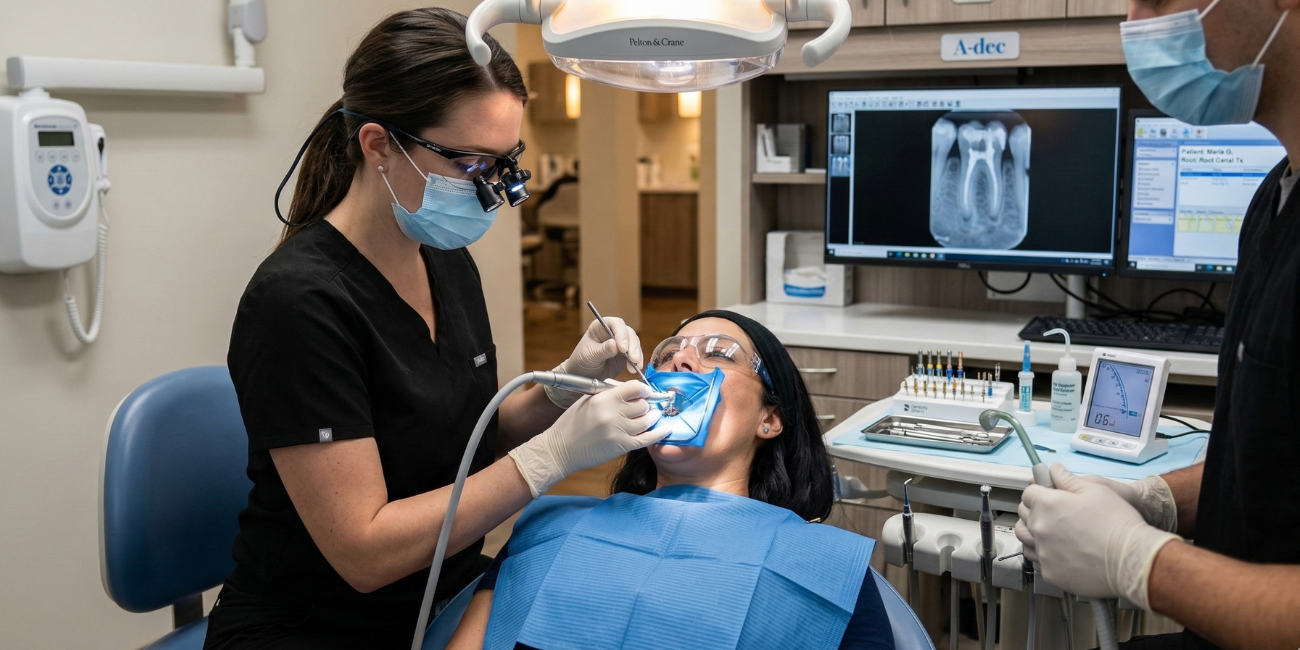
Root Canal Therapy in Khajaguda to Save Your Natural Tooth
Introduction
Tooth pain can be extremely uncomfortable and may affect your daily routine, eating habits, and overall quality of life. Severe tooth pain often indicates an infection deep inside the tooth that requires immediate dental care.
One of the most effective treatments for saving an infected tooth is Root canal therapy in khajaguda. This advanced dental procedure removes infection from the tooth and restores its function without needing extraction.
If you are experiencing intense tooth pain or sensitivity, seeking Root canal therapy in khajaguda can help eliminate the infection and preserve your natural tooth.
What is Root Canal Therapy?
Root canal therapy is a common dental procedure used to treat infection or damage inside the tooth. The inner part of the tooth, known as the dental pulp, contains nerves, blood vessels, and connective tissues. When this pulp becomes infected due to deep tooth decay, cracks, repeated dental procedures, or injury, it can cause severe pain and swelling.
Root canal therapy in khajaguda is performed to remove the infected or damaged pulp, clean the inside of the tooth, and seal it to prevent further infection. This treatment helps preserve the natural tooth and eliminates the need for extraction.
During the procedure, the dentist carefully removes the infected tissue, disinfects the inner canals of the tooth, and fills them with a special dental material. In many cases, a dental crown is placed over the treated tooth to restore its strength, function, and appearance.
The main goal of Root canal therapy in khajaguda is to relieve pain, remove infection, and protect the natural tooth so that it can continue to function normally for many years.
Signs You May Need Root Canal Therapy
Tooth infections often develop gradually, and early symptoms may sometimes be ignored. However, untreated infections can worsen and lead to serious dental problems, including tooth loss.
Some common symptoms that may indicate the need for Root canal therapy in khajaguda include:
- ▸ Severe tooth pain, especially while chewing or biting
- ▸ Prolonged sensitivity to hot or cold foods and beverages
- ▸ Swollen, tender, or bleeding gums around the affected tooth
- ▸ Tooth discoloration or darkening of the tooth
- ▸ Persistent toothache that does not go away
- ▸ A small pimple-like bump on the gums near the infected tooth
- ▸ Swelling in the face or jaw area
If you experience any of these symptoms, it is important to visit a dentist as soon as possible. Early diagnosis and timely Root canal therapy in khajaguda can prevent the infection from spreading to surrounding teeth and tissues.
Benefits of Root Canal Treatment
Root canal treatment offers several important benefits for maintaining your oral health. Many people believe that removing a painful tooth is the only solution, but Root canal therapy in khajaguda allows patients to preserve their natural teeth.
- ▸ Saves the Natural Tooth One of the main advantages of root canal treatment is that it helps preserve the original tooth structure. Keeping your natural tooth helps maintain proper chewing ability and jaw alignment.
- ▸ Relieves Severe Tooth Pain Tooth infections can cause intense pain and discomfort. By removing the infected pulp and cleaning the tooth, Root canal therapy in khajaguda eliminates the source of pain and provides lasting relief.
- ▸ Prevents Spread of Infection If left untreated, dental infections can spread to nearby teeth, gums, or even the jawbone. Root canal therapy removes bacteria and prevents further complications.
- ▸ Restores Normal Tooth Function After the procedure and placement of a crown, the treated tooth can function just like a natural tooth. Patients can chew, speak, and smile comfortably.
- ▸ Long-Lasting Results With proper care and regular dental visits, teeth treated with Root canal therapy in khajaguda can last for many years, providing a reliable and durable solution for infected teeth.
Root Canal Therapy Procedure
The procedure for Root canal therapy in khajaguda is usually completed in one or two dental visits, depending on the severity of the infection. Dentists follow a systematic approach to ensure complete removal of infection and restoration of the tooth.
- ▸ Step 1: Dental Examination and Diagnosis The dentist first examines the affected tooth and may take digital X-rays to determine the extent of infection and the condition of the surrounding bone.
- ▸ Step 2: Local Anaesthesia To ensure a comfortable treatment experience, the dentist administers local anaesthesia to numb the area around the infected tooth. This helps minimise pain during the procedure.
- ▸ Step 3: Removal of Infected Pulp A small opening is made on the surface of the tooth to access the infected pulp inside the canals. The dentist carefully removes the damaged tissue.
- ▸ Step 4: Cleaning and Shaping the Canals After removing the infected pulp, the dentist cleans and disinfects the root canals thoroughly. The canals are then shaped to prepare them for filling.
- ▸ Step 5: Filling and Sealing the Tooth The cleaned canals are filled with a specialised dental material and sealed to prevent bacteria from re-entering the tooth.
- ▸ Step 6: Placement of Dental Crown In most cases, a dental crown is placed over the treated tooth to restore its strength and protect it from future damage. This ensures that the tooth can function normally after Root canal therapy in khajaguda.
How to Care for a Tooth After Root Canal Treatment
Proper aftercare is essential to ensure the success and longevity of Root canal therapy in khajaguda. Maintaining good oral hygiene habits helps protect the treated tooth and prevents future dental problems.
Here are some important care tips:
- ▸ Brush your teeth at least twice a day using a fluoride toothpaste
- ▸ Floss daily to remove plaque between teeth
- ▸ Avoid chewing hard foods on the treated tooth until it is fully restored with a crown
- ▸ Attend regular dental checkups and professional cleanings
- ▸ Maintain good oral hygiene habits to prevent further infections
- ▸ Follow your dentist’s instructions for post-treatment care
With proper care, teeth treated with Root canal therapy in khajaguda can remain strong and healthy for many years.
Why Choose Scope Dental Clinics for Root Canal Therapy?
Choosing the right dental clinic is important for successful treatment and patient comfort. If you are searching for reliable Root canal therapy in khajaguda, Scope Dental Clinics offers advanced dental care with a focus on patient safety and long-term oral health.
At Scope Dental Clinics, we combine modern technology with experienced dental professionals to deliver precise and effective root canal treatments.
Our clinic provides:
- ▸ Skilled and experienced root canal specialists
- ▸ Advanced diagnostic tools and modern dental equipment
- ▸ Comfortable and hygienic treatment environment
- ▸ Accurate diagnosis and personalised treatment plans
- ▸ Patient-focused care with attention to comfort and safety
Our goal is to provide safe, painless, and effective Root canal therapy in khajaguda, helping patients restore their oral health and maintain a healthy, confident smile.
Conclusion
Severe tooth pain and infection should never be ignored, as they can lead to serious dental problems. Treatments like Root canal therapy in khajaguda help remove infection while preserving your natural tooth.
This procedure eliminates pain, restores tooth function, and prevents further oral health complications.
At Scope Dental Clinics, we provide advanced and comfortable Root canal therapy in khajaguda to help patients save their natural teeth and regain a healthy smile. If you are experiencing tooth pain or sensitivity, book your consultation today and protect your smile with expert dental care.
Transform your smile today contact Scope Dental Hyderabad now
Have Questions About Your Dental Care?
Find clear answers to common questions about treatments, appointments, and dental care at Scope Dental Clinic.
Root canal treatment is usually not painful because it is performed under local anaesthesia. Modern dental techniques ensure that the procedure is comfortable, and most patients feel relief from tooth pain after the treatment.
Most root canal treatments can be completed in one or two dental visits, depending on the condition of the tooth and the level of infection.
Root canal therapy has a high success rate and can help preserve the natural tooth for many years when proper dental care and oral hygiene are maintained.
In many cases, dentists recommend placing a dental crown after root canal treatment. A crown helps protect the treated tooth and restores its strength and function.
Although rare, root canal treatment can fail if bacteria re-enter the tooth and cause reinfection. Regular dental check-ups and good oral hygiene help prevent this problem.
Yes, saving the natural tooth with root canal therapy is usually the best option whenever possible. It helps maintain proper chewing function and prevents neighbouring teeth from shifting.